Leave Your Message

How to Choose a Valve Body Supplier in 2026?

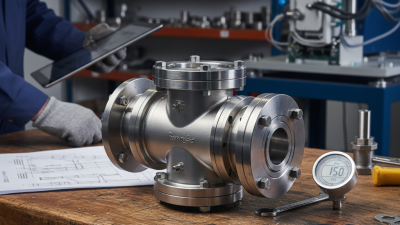
Choosing a Valve Body supplier in 2026 requires more than comparing unit prices. The right partner must prove material quality, machining accuracy, pressure performance, and delivery consistency. A polished website is not enough. Ask for heat-number traceability, dimensional inspection reports, hydrostatic test records, and clear evidence of process control. Even small details matter, such as protected sealing surfaces, clean threaded ports, and packaging that prevents corrosion during ocean transport.

Valve engineering educator R. W. Miller is often quoted as saying, “A valve earns trust through performance, not appearance.” That principle remains practical when evaluating a supplier. Review the supplier’s experience with your media, pressure range, temperature limits, and applicable industry standards. Confirm whether its foundry and machining partners are audited regularly. Request sample reports before placing a large order. A reliable supplier should explain failure risks without hiding behind technical language.

Digital tracking also deserves attention in 2026. Suppliers should connect production records with batch identification, inspection data, and corrective-action history. However, technology cannot replace skilled inspection. A dashboard may show green status while a sealing face carries a barely visible machining mark. That possibility deserves honest discussion. Site visits, independent testing, and reference checks can reveal what brochures cannot. Cost still matters, but the cheapest Valve Body may create higher expenses through leakage, downtime, or rejected assemblies. The strongest choice combines technical evidence, responsive communication, and realistic capacity. No checklist is perfect. Your application should decide the final question: can this supplier deliver the same safe performance, repeatedly, under actual operating conditions?
How to Choose a Valve Body Supplier in 2026?

Define Valve Requirements: Size, Media, Temperature, and ASME Class 150–2500

How to Choose a Valve Body Supplier in 2026?

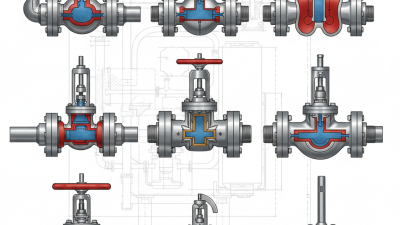
Defining valve requirements should happen before comparing suppliers. Start with nominal size, connection type, and face-to-face dimensions. A mismatch can delay installation or force expensive piping changes. Small details matter. Identify the process media clearly, including concentration, solids, toxicity, and corrosion potential. Water, steam, acids, and abrasive slurries demand different body materials and internal designs. Do not describe media as “standard.” That word often hides important risks.

Temperature affects material strength, sealing performance, and pressure capability. Record normal, minimum, maximum, and possible upset temperatures. Then select the required ASME Class, from 150 through 2500, according to pressure and temperature conditions. Class 600 is not simply four times stronger than Class 150. Ratings depend on material and operating temperature. An experienced supplier should provide pressure-temperature tables, material specifications, and dimensional drawings before production.

Ask how the supplier controls casting, machining, heat treatment, and inspection. Request material certificates, test records, and clear traceability for each valve body. I have seen projects delayed because certificates arrived after shipment. That mistake is avoidable, but not every checklist catches it. Confirm testing methods, acceptance criteria, repair controls, and document accuracy. A capable supplier should question incomplete requirements instead of accepting them silently. Their engineers should explain trade-offs in plain language, especially when size, media, temperature, and Class 150–2500 ratings appear inconsistent.
Verify Body Materials Using ASTM Grades and Corrosion-Rate Data

How to Choose a Valve Body Supplier in 2026?

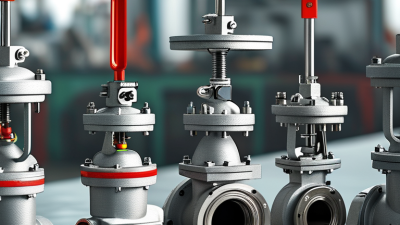
Selecting a valve body supplier requires more than a polished certificate. Ask for the exact ASTM grade, heat number, and material test report. The report should match the body marking and purchase specification. Check chemistry, tensile strength, yield strength, elongation, and heat treatment records. For stainless steel, chromium and nickel levels can reveal grade confusion. A missing value deserves attention. I have seen paperwork pass review while traceability stopped at a distributor.

The report should match the body marking and purchase specification.

ASTM grade verification is only the starting point. Request corrosion-rate data from a comparable medium and temperature. Fresh water at 25°C cannot represent hot chloride service. Review test duration, specimen condition, flow velocity, pH, chloride concentration, and measurement method. Confirm whether the rate uses mm/year or mils per year. Unit errors can distort a decision. Data from a polished laboratory coupon may not predict crevices around seats, threads, or casting defects.

Fresh water at 25°C cannot represent hot chloride service.

An experienced supplier should explain differences between ASTM A216 WCB and ASTM A351 CF8M, including service limits. Ask how they control heat treatment, nondestructive examination, repair welding, and final dimensional checks. Independent laboratory verification can strengthen disputed results. Still, supplier data is not automatically site data. Your process engineer should compare it with actual pressure, temperature, contaminants, and shutdown conditions. I would record assumptions openly, because corrosion predictions are rarely perfect. That honesty often exposes the missing test.

Audit Supplier Quality: ISO 9001, IATF 16949, and Full Traceability

Choosing a valve body supplier in 2026 requires more than comparing prices or polished factory photos. Quality begins with documented control. Ask for a current ISO 9001 certificate, the issuing body, and its valid scope. For automotive applications, IATF 16949 may show stronger process discipline, but certification alone proves little.

Walk through the supplier’s records. Can each valve body be linked to its material heat number, casting batch, machining program, operator, and inspection results? Full traceability should work backward and forward. A marked part should connect to a traveler, coordinate-measuring report, pressure-test record, and shipment date within minutes.

Look closely.

During an audit, inspect incoming material labels and quarantined parts. Check whether nonconforming components are physically separated or simply tagged in a crowded area. Review calibration dates on gauges, sampling plans, and corrective-action evidence. Ask to see a recently closed problem, not only successful production files.

I have found that clean procedures can hide weak habits. One supplier may maintain excellent paperwork while operators skip a verification step during shift changes. Another may have limited automation but stronger hands-on control. That difference matters. Request a live process demonstration, interview quality staff privately, and compare records with actual floor conditions. A reliable supplier welcomes difficult questions and can explain gaps without changing the subject. Perfect audits are unlikely; transparent improvement is more credible.

Compare Testing: API 6D and ASME B16.34 Require 1.5× Shell Tests

How to Choose a Valve Body Supplier in 2026?

When comparing valve body suppliers, begin with pressure-test discipline. API 6D and ASME B16.34 generally require shell testing at 1.5 times the applicable pressure rating. The exact pressure depends on the valve class, size, temperature, and edition used. A capable supplier should identify these details before testing, not after receiving an order.

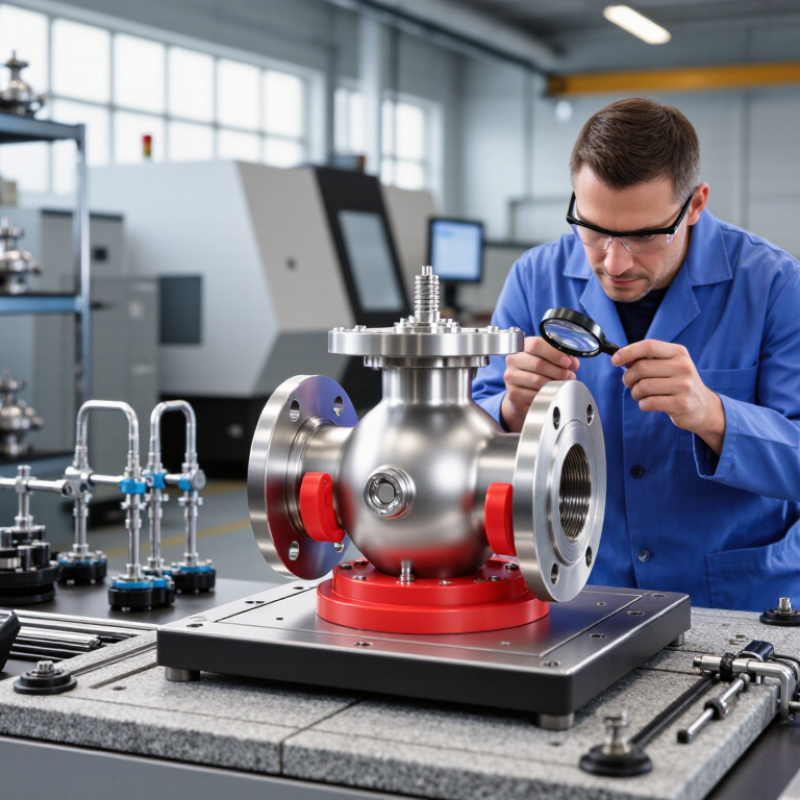
Ask for the approved test procedure, calibrated gauge records, test medium, holding time, and acceptance criteria. During a witnessed test, the valve body should remain dry externally, without visible leakage or pressure loss. Look closely at flange joints, stem areas, and body plugs. Small details matter. A supplier that only provides a polished certificate deserves further questions. The document should show the valve identification, test pressure, gauge number, operator, date, and standard edition.

I have seen test records that appeared complete but lacked traceable calibration data. That weakness can undermine otherwise good engineering work. Maybe the supplier’s process is reliable; maybe the paperwork is simply unfinished. Verify it.

Ask whether nonconforming results are retained, reviewed, and corrected. Also check material certificates, heat-number traceability, dimensional reports, and final inspection photographs. A lower quotation may reflect fewer controls rather than better efficiency. One missed record can become a costly field problem.

Rank Total Cost: Lead Time, Warranty, Service Life, and ESG Performance

How to Choose a Valve Body Supplier in 2026?

Rank total cost, not the purchase price. A low-cost valve body can become expensive after one missed shutdown. The World Bank’s 2023 Logistics Performance Index measures customs, infrastructure, shipment quality, and timeliness. Ask suppliers for verified lead-time data, not optimistic averages. Request recent order records, production capacity, and a clear escalation plan. A practical audit should trace one valve from raw material certificate to final pressure test.

Warranty terms need careful reading. Check coverage, response time, excluded failures, and field-replacement costs. Service life matters more than a long warranty. Require material traceability, cycle-test results, corrosion data, and maintenance intervals. The U.S. Department of Energy’s Operations and Maintenance guidance links preventive maintenance with improved equipment reliability and lower life-cycle costs. Still, supplier claims may be incomplete. I would challenge them with your actual pressure, temperature, media, and cycling conditions.

ESG performance belongs in the same cost model. The International Energy Agency reports that industry consumed about 37% of global final energy in 2022. Therefore, inefficient manufacturing can increase both emissions and procurement risk. Review energy intensity, recycled-material content, emissions boundaries, and third-party verification. CDP’s corporate disclosure data also shows that climate reporting is becoming widespread, but disclosure quality varies. A polished questionnaire is not proof. Compare audited evidence, corrective-action records, and supplier-site practices. Then calculate total cost per operating year, including freight, downtime, inspections, repairs, disposal, and carbon exposure. A spreadsheet may look precise. Your assumptions may not be.