2026 Best Valve Bonnet Types for Industrial Applications?
In the evolving landscape of industrial applications, the choice of valve components plays a critical role. The valve bonnet, a vital section, provides strength and support. Expert engineer Dr. Sarah Mitchell emphasizes, "A well-designed valve bonnet ensures operational reliability and longevity." Her insights highlight the importance of selecting the right type.
Various types of valve bonnets exist, each suited for specific environments. They range from cast iron to stainless steel variations. Each material offers unique advantages in durability and resistance to harsh conditions. However, these materials are not foolproof. Some may corrode or fail under extreme pressures. Thus, careful consideration is necessary.
Engineers must weigh factors such as pressure ratings, temperature ranges, and fluid types before making a decision. The imperfect nature of industrial standards often leaves room for error. Choosing the appropriate valve bonnet type requires both knowledge and experience. Experts must remain vigilant to avoid common pitfalls in valve selection. Balancing expertise and real-world challenges is essential for optimal performance.

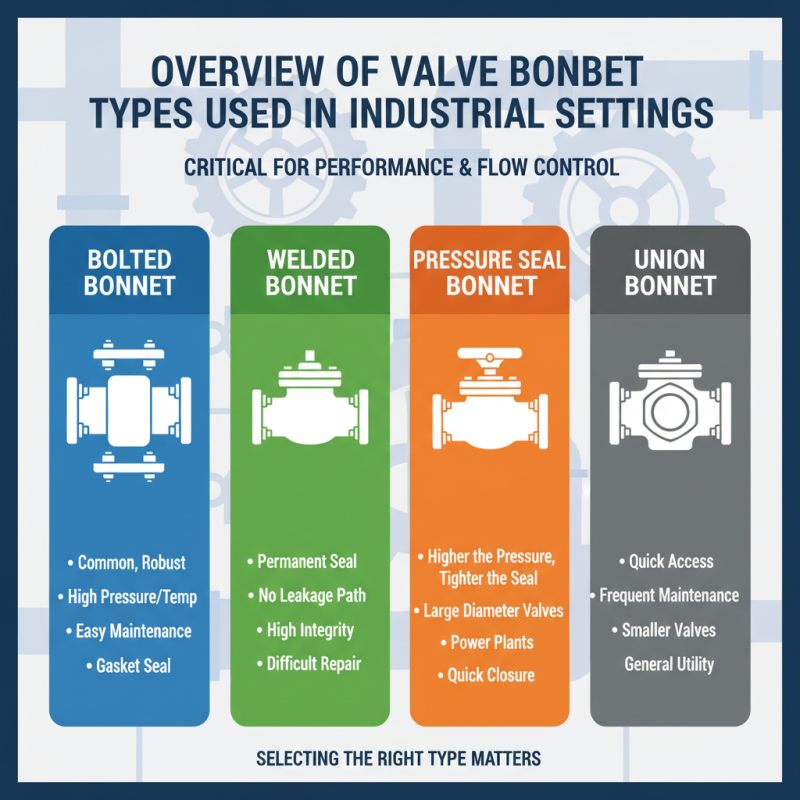
Overview of Valve Bonnet Types Used in Industrial Settings
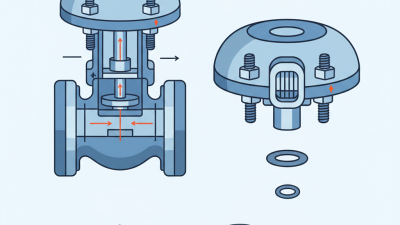
In industrial applications, selecting the right valve bonnet type is critical for performance. Valve bonnets play a significant role in the operation of valves. They house the actuator and the mechanism that controls the flow. Each type of bonnet provides specific benefits and drawbacks.
For instance, a bolted bonnet allows for easier maintenance but may compromise the sealing capability over time. A welded bonnet offers superior integrity but poses challenges for repairs. Choosing between these options requires careful consideration of maintenance needs and operational pressures.
**Tips:** Always evaluate each valve's environmental conditions before making a choice. Consider future maintenance needs, not just current requirements. Look for signs of wear and potential failure points in existing systems.
Leveraging expertise in valve technologies can enhance decision-making. Consult technical resources or speak with industry professionals about the latest innovations. It’s important to balance cost with functionality. Sometimes a cheaper option leads to higher long-term expenses. Engineers and operators should revisit their choices regularly to ensure optimal performance.
Material Selection for Valve Bonnet Construction in Various Applications
When selecting materials for valve bonnet construction, one must consider the specific industrial application. Key factors include temperature, pressure, and potential corrosion. Common materials include stainless steel, carbon steel, and various alloys. Each offers distinct advantages and drawbacks. Stainless steel is renowned for its corrosion resistance, but it can be more expensive than carbon steel.
**Tip:** Always evaluate the operational environment. Ask yourself: What are the chemical exposures? Is there a likelihood of extreme temperatures?
In some cases, composite materials may also be suitable. They can provide lightweight benefits but may not be as durable under high-pressure conditions. The challenge lies in choosing the right material that meets the demands of the specific application while ensuring longevity and reliability.
**Tip:** Consult with industry experts when uncertain. They can offer insights on material longevity and performance metrics.
Balancing these factors is crucial. A misstep in material selection can lead to premature failure. Thus, understanding the specific environment and application becomes essential for making an informed choice.
2026 Best Valve Bonnet Types for Industrial Applications
| Bonnet Type |
Material |
Temperature Range (°C) |
Pressure Rating (PSI) |
Common Applications |
| Bolted Bonnet |
Carbon Steel |
-29 to 425 |
150 - 600 |
Oil and Gas |
| Welded Bonnet |
Stainless Steel |
-196 to 800 |
150 - 2500 |
Chemical Processing |
| Composite Bonnet |
Plastic/Composite |
-50 to 120 |
150 - 300 |
Water Treatment |
| Screwed Bonnet |
Copper Alloy |
-40 to 250 |
150 - 500 |
HVAC Systems |
| Integral Bonnet |
Alloy Steel |
-50 to 400 |
300 - 2500 |
High-Pressure Systems |
Comparison of Functional Designs for Different Valve Bonnet Types
When selecting valve bonnet types for industrial applications, understanding functional designs is critical.
Different bonnet configurations serve unique purposes, influencing performance and reliability. A report from the Engineering and Manufacturer's Association highlights that the right bonnet type can enhance operational efficiency by up to 25%.
For instance, a welded bonnet offers superior strength and pressure retention. However, its rigid design may complicate maintenance. Conversely, bolted bonnets facilitate easier access for repairs.
According to industry analysis, almost 40% of maintenance delays in valve systems stem from difficult bonnet designs.
Additionally, the choice between bellows and threaded bonnets impacts functionality. Bellows bonnets excel in preventing leaks. Yet, they are generally more costly to manufacture.
Threaded designs are economical and easier to install, but may compromise sealing ability. A balance between cost and performance is essential. This design complexity means that continually reassessing the needs of specific applications is vital for optimizing valve functionality.
Maintenance and Durability Considerations for Valve Bonnets in Industry
When considering valve bonnets for industrial applications,
maintenance and durability play critical roles. The valve bonnet must withstand
high pressure and temperature variations.
A report from the American Society of Mechanical Engineers (ASME) indicates that over
30% of valve failures stem from inadequate maintenance.
Regular inspections can prevent these costly failures.
Material selection is vital for longevity.
Stainless steel and forged carbon steel are popular choices due to
their resistance to corrosion. Each material exhibits unique characteristics which affect durability.
For example, carbon steel can become brittle in low temperatures. Understanding these properties allows
for better decision-making.
It’s also important to note the impact of
installation practices. Improper installation can lead to
premature failures. Statistics show that
nearly 25% of all valve issues result from human error during setup.
Training staff on best practices can mitigate these risks significantly, enhancing overall system reliability.
Trends and Innovations in Valve Bonnet Technology for 2026 and Beyond
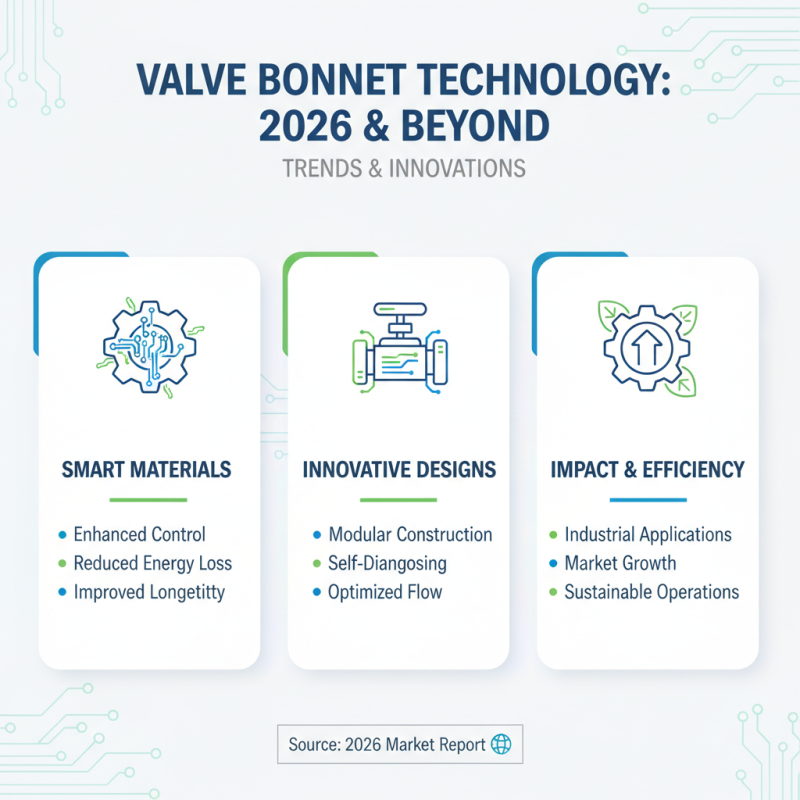
The valve bonnet is an essential component in industrial applications, significantly impacting performance and safety. In 2026, trends indicate a shift towards smart materials and innovative designs. According to a recent market report, smart valve bonnets can enhance control, reduce energy loss, and improve longevity. These advancements are driven by the increasing need for efficiency in various sectors.
Tips: When selecting a valve bonnet, consider materials that can withstand extreme conditions. Stainless steel and high-performance polymers are popular for their durability and resilience.
Innovations are not only focused on materials but also on automation. Data from industry experts highlight a growing interest in integrated monitoring systems. These systems enable real-time data collection, allowing operators to predict failures and optimize maintenance schedules. The shift towards automation is not without challenges; implementing these technologies requires proper training and adaptation.
Tips: Regularly review the compatibility of valve bonnets with existing systems. This ensures seamless integration and maximizes operational efficiency.
As we look to the future, the importance of sustainability also influences design. More manufacturers are exploring eco-friendly materials. However, challenges remain in balancing sustainability with performance requirements. Ultimately, ongoing research is necessary to refine these emerging technologies and ensure they meet industry standards.