Top 5 Valve Stem Tips for Global Buyers to Consider
In the dynamic world of industrial manufacturing, valve stems play a crucial role in the functionality of various equipment. According to a MarketWatch report, the global valve market is projected to reach over $90 billion by 2027, reflecting significant growth in sectors like oil and gas, water management, and chemicals. As a pivotal component, the valve stem is essential for controlling fluid flow and pressure.
Understanding the nuances involved in valve stem selection is vital for global buyers. Factors such as material compatibility and operational parameters can significantly influence performance. For instance, a mismatch in materials can lead to premature failure, affecting operational efficiency. Manufacturers often face challenges in sourcing high-quality valve stems that meet specific industry standards.
In an era of sustainability and cost-effectiveness, buyers must consider the long-term implications of their choices. Investing in durable and reliable valve stems can lead to reduced maintenance costs and longer service life. However, it’s easy to overlook the importance of valve stem specifications amidst competitive pricing pressures. This article highlights the top five valve stem tips to facilitate informed decision-making for global buyers.

Understanding Valve Stem Types and Their Applications in Various Industries
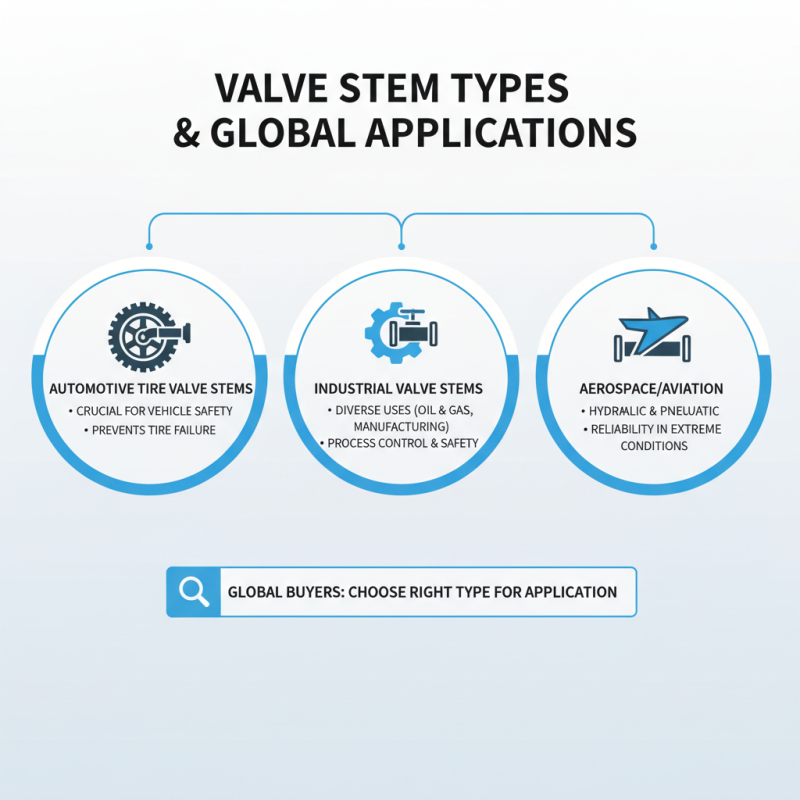
When exploring valve stems, understanding the types and their applications is crucial for global buyers. There are various types of valve stems, each serving different needs across industries. For instance, the automotive sector relies heavily on tire valve stems. Reports indicate that tire valve stems contribute significantly to vehicle safety. A malfunction here can lead to tire failure, creating hazards on the road.
In industrial applications, valve stems are pivotal in controlling fluid flow. According to recent studies, about 40% of fluid control issues arise from inadequate valve stem specifications. Many industries—including oil and gas—must prioritize quality and precision. An incorrect valve stem can disrupt operations, leading to costly downtimes.
Moreover, the manufacturing process is essential. Precision-engineered valve stems reduce the chances of failure. However, not all manufacturers meet rigorous standards. Buyers should demand clarity about the production methods used. Lack of transparency can be risky. Understanding these factors allows buyers to make informed decisions.
Evaluating Material Composition for Optimal Performance and Durability
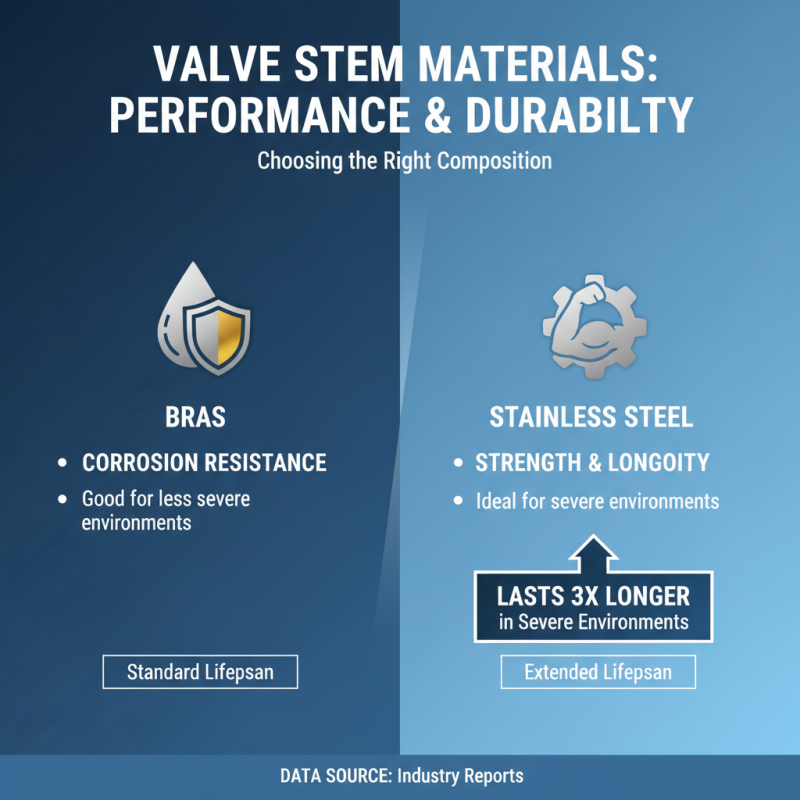
When evaluating valve stems, material composition is crucial for performance and durability. Different materials exhibit distinct properties. For instance, brass offers corrosion resistance, while stainless steel provides strength and longevity. According to industry data, stainless steel valve stems can last up to three times longer than their brass counterparts in severe environments. This information underscores the importance of choosing the right material for specific applications.
Tip: Assess the working environment and application requirements before deciding. Factors like temperature and pressure play a significant role. In high-temperature situations, materials like Inconel or Monel could be more effective. Selecting a valve stem that can withstand the specific conditions is essential for ensuring longevity and reducing maintenance costs.
It’s also worth noting that improper material selection can lead to premature failures. A study from a leading engineering journal indicated that 30% of valve failures stem from material incompatibility. This statistic highlights the need for careful consideration of material properties in relation to operational demands. Balancing cost and quality is vital, but it should never compromise safety and reliability.
Assessing Valve Stem Sizing Standards: ANSI, ISO, and Other Regulations
When choosing valve stems, it's essential to understand sizing standards. Standards such as ANSI and ISO offer guidelines that help ensure compatibility and performance. Compliance with these regulations indicates reliability in various applications. Global buyers must familiarize themselves with these requirements to make informed decisions.
Tip: Always verify the dimensional specifications of valve stems against applicable standards. This verification can prevent costly mistakes and delays. Ensure all selected components meet necessary criteria for maximum efficiency.
Another important aspect is the material. The material impacts durability, cost, and function. Different industries may require various materials, leading to potential oversights in selection processes. Conducting thorough research can help mitigate this issue.
Tip: Tap into resources like industry publications and expert consultations. This can guide you on the latest trends and standards. Engaging with professionals can illuminate the sometimes murky waters of valve stem selection.
Analyzing Market Trends: Demand for Valve Stems in Emerging Markets
The global demand for valve stems is rapidly evolving, particularly in emerging markets. Recent reports indicate that the valve stem market is projected to grow at a CAGR of 5.6% from 2023 to 2030. This growth is fueled by industrial expansion in Asia-Pacific and Latin America. Industries like automotive, oil and gas, and water management are key drivers.
Emerging markets are witnessing an increase in infrastructure development. Demand for reliable valve stems is rising. Local manufacturers are striving to meet these needs. However, many face challenges in quality control and consistency. A survey by the International Valve Association highlights that 70% of these manufacturers struggle with production standards.
Furthermore, the preference for customized valve stems is on the rise. Companies are seeking solution providers who can offer flexibility and quality. While this trend presents opportunities, it also stresses the importance of building strong supplier relationships. Buyers must verify supplier capabilities and ensure compliance with industry standards. As global dynamics shift, understanding local market nuances becomes crucial for success in valve stems procurement.
Valve Stem Demand Analysis in Emerging Markets
Cost-Benefit Analysis: Choosing the Right Valve Stem for Your Needs
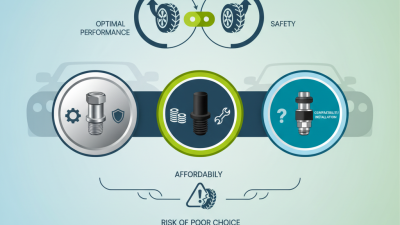
When selecting valve stems, understanding the cost-benefit ratio is crucial. Valve stems vary widely in price depending on material and design. According to industry reports, materials like brass and stainless steel generally last longer than plastic, offering greater durability. However, they come at a higher initial cost. For instance, a brass valve stem may cost 30% more than its plastic counterpart. Yet, the longevity can outweigh the initial expense, making it a better investment in the long run.
Beyond cost, performance and reliability must be considered. The right valve stem can improve system efficiency and reduce maintenance costs over time. An analysis found that using high-quality valve stems can cut maintenance needs by up to 25%. Many users underestimate the importance of durability and compatibility with existing systems. It's essential to evaluate how a valve stem's features align with specific operational requirements.
Buyers should also reflect on their unique needs. Choosing a valve stem is not just about the price tag. In some cases, a lower-cost option can lead to higher long-term expenses due to frequent replacements. Therefore, a careful examination of quality, cost, and application is vital to making an informed decision.