



3 Piece Flanged Ball Valve


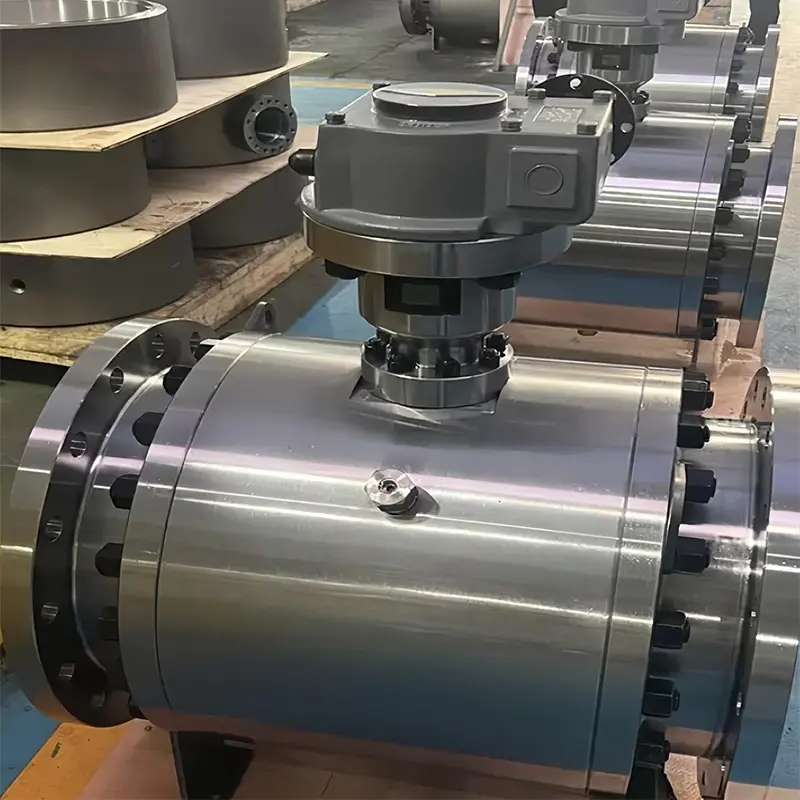
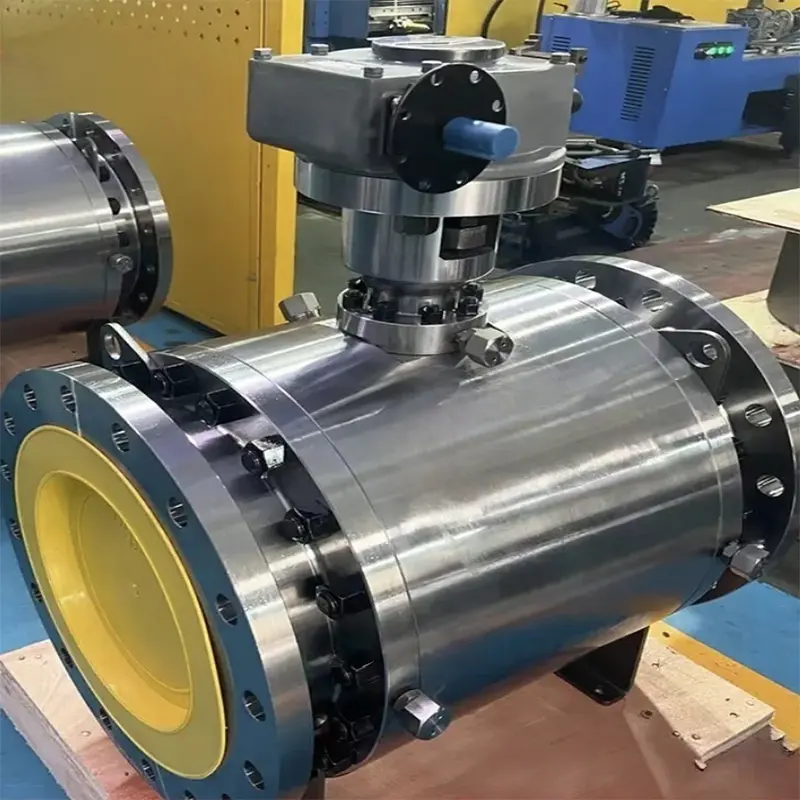
3 Piece Flanged Trunnion Ball Valve for Industrial Service
-
Product Details
This valve is built around a trunnion-mounted ball structure. The ball is fixed and supported by upper and lower trunnions, while the seats move slightly to maintain sealing.
In actual use, this reduces the operating torque and improves sealing consistency over time.
The body is a bolted three-piece design. Compared with welded or one-piece valves, this makes disassembly more practical if internal parts need inspection or replacement. For users handling continuous
service pipelines, this structure is often easier to manage during maintenance cycles.
Materials are selected based on working conditions. Stainless steel is commonly used for corrosion resistance, while carbon steel is
used in general service. Seat material can be PTFE or reinforced types depending on temperature and media.
The valve can be supplied with manual lever, worm gear, or actuator. For sizes above DN150, gear operation is usually recommended
to keep operation stable in the field.
-
Features
-
Application
-
FAQ
Q1: What is the difference between trunnion and floating ball valves?
A trunnion ball valve has a fixed ball supported by trunnions. A floating ball valve relies on pressure to push the ball into the seat.
Trunnion design is more stable in larger sizes and higher pressure.
Q2: When should I choose a three-piece body valve?
If maintenance access is important. The three-piece design allows you to open the valve body and replace internal parts without removing the entire valve.
Q3: Is gear operation necessary?
For small sizes, manual lever is usually enough. For larger sizes, gear operation helps reduce effort and improves control.
Q4: What seat materials are available?
Common options include PTFE and reinforced PTFE. Selection depends on temperature, pressure, and media.
Q5: Can this valve be used for control (throttling)?
It is mainly designed for full open or full close service. For flow control, a V-port ball valve is usually more suitable.