Leave Your Message

⚙️ NACE MR0175 / ISO 15156 Compliance Guide Sourcing Valve Components for Sour (H₂S) Service

What Every Procurement Engineer Must Know About Material Selection, Hardness Limits & Documentation for H₂S Environments

🛡️ NACE MR0175 ⚗️ ISO 15156 🔩 Sour Service Valves 📋 Material Traceability ✅ HRC ≤ 22
💧 The Invisible Threat

What Is Sour Service — And Why Should You Care?

When oil and gas pipelines or processing equipment encounter hydrogen sulfide (H₂S), the environment is called "sour service." H₂S is a colorless, highly toxic gas that doesn't just corrode metal — it causes a specific type of cracking known as Sulfide Stress Cracking (SSC). Regular valve materials that perform perfectly in normal conditions can suddenly become brittle and fail catastrophically in sour environments, often without visible warning.

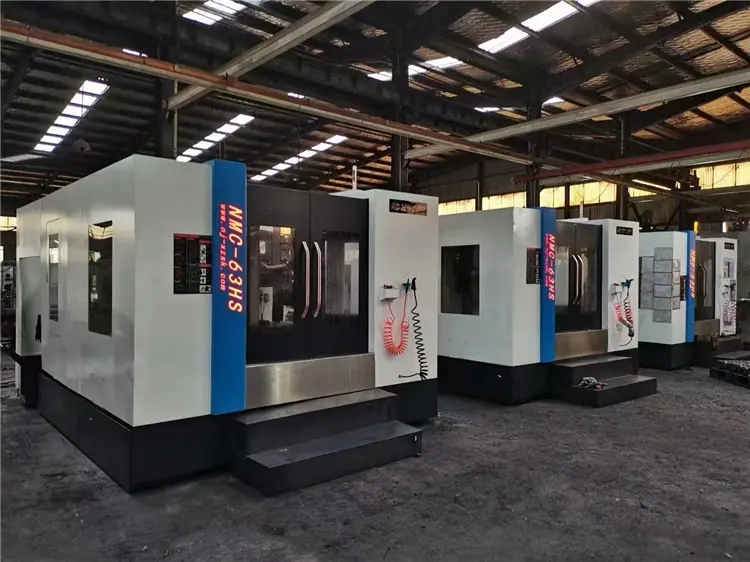
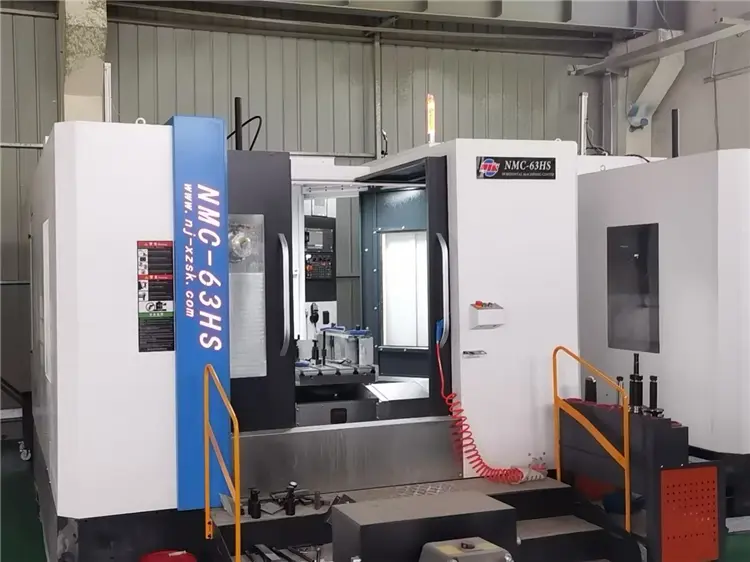
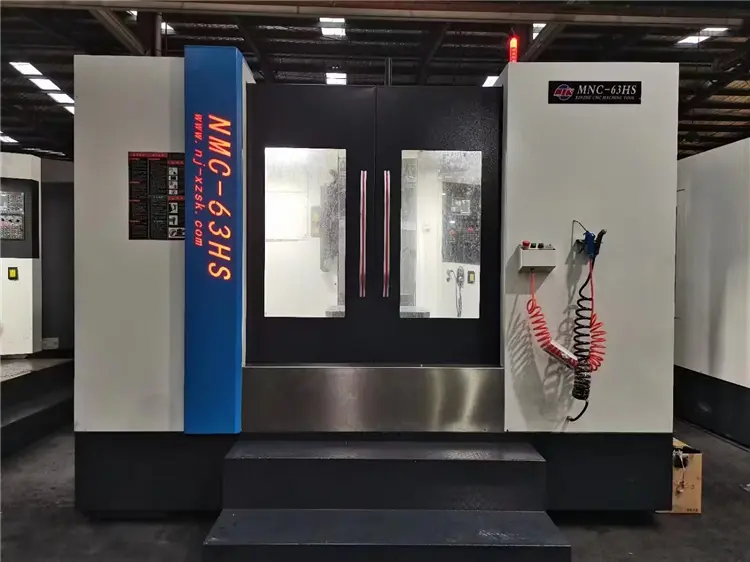
Sour service valve components manufacturing at Yining Machinery

Imagine using a standard carbon steel valve stem in a natural gas pipeline where H₂S concentration is just 0.0003 MPa partial pressure. Within weeks — or even days — micro-cracks can propagate through the metal, leading to a sudden, uncontrolled release. The consequences range from costly unplanned shutdowns to catastrophic explosions and fatalities.

This is exactly why the industry developed NACE MR0175 / ISO 15156 — a globally recognized standard that defines precisely which materials are safe to use in H₂S-containing environments, and under what conditions. If you're procuring valve components for upstream oil & gas, refining, or petrochemical applications, this standard is non-negotiable.

0.0003
MPa H₂S Partial Pressure Threshold
22
HRC Max Hardness Limit
3
Standard Parts (MR0175)
⚠️
Critical Fact: SSC (Sulfide Stress Cracking) can occur even at very low H₂S concentrations — as little as 0.05 psi (0.0003 MPa) partial pressure is enough to trigger the mechanism in susceptible materials. The failure is often sudden and gives no visible warning signs.
📘 The Standard Explained

What Is NACE MR0175 / ISO 15156?

A plain-English breakdown of the world's most important standard for sour service material selection — what it covers, what it controls, and what it does NOT do.

📖

What It Is

NACE MR0175 (now jointly published as ISO 15156) is a three-part international standard developed by NACE International and ISO. It was first published in 1975 and has been regularly updated. It is the primary reference document used worldwide for selecting materials in oil and gas production environments containing H₂S.

🎯

What It Controls

The standard defines: H₂S partial pressure thresholds that trigger sour service conditions; maximum hardness limits for different material groups (e.g., ≤22 HRC for carbon and low-alloy steels); approved alloy grades and heat treatment requirements; and environmental limits such as temperature, pH, and chloride content.

🗂️

Its Three Parts

Part 1: General principles and requirements — the framework. Part 2: Cracking-resistant carbon and low alloy steels, and the use of cast irons. Part 3: Cracking-resistant CRAs (Corrosion Resistant Alloys) and other alloys — covering stainless steels, duplex, Inconel, and more.

💡
Key Takeaway: NACE MR0175 / ISO 15156 is NOT a certification program — it is a material selection rulebook. No company gets "NACE certified." Instead, materials and components are selected and verified in compliance with NACE MR0175. When a supplier says their valve is "NACE compliant," they mean the materials meet the hardness, chemistry, and heat treatment requirements defined in the standard for the intended sour service conditions.
🔬 Material Intelligence

How to Select the Right Materials for Sour Service Valves

Not all stainless steel is created equal for H₂S environments. Here's a practical comparison of approved vs. restricted materials — and why hardness is the single most critical parameter to verify.

✅ Approved / Commonly Used Materials
316L / CF3M Stainless Steel
Low-carbon austenitic stainless steel with excellent corrosion resistance. Widely approved under NACE MR0175 Part 3 when hardness is verified ≤22 HRC. Ideal for valve bodies, bonnets, and trim components. Must be solution-annealed, not cold-worked.
2205 Duplex Stainless Steel (UNS S31803)
Dual-phase microstructure providing superior strength and corrosion resistance. Approved for sour service under specific temperature and H₂S partial pressure limits. Excellent for high-pressure valve stems and bodies. Hardness must not exceed 28 HRC per NACE Part 3 limits.
Inconel 625 / Alloy 825
High-performance nickel alloys for extreme sour service conditions. Inconel 625 is virtually immune to SSC across a wide range of H₂S concentrations. Used for valve seats, sealing surfaces, and critical trim in HPHT wells. Higher cost but unmatched reliability.
Monel 400 (UNS N04400)
Nickel-copper alloy with outstanding resistance to H₂S. Approved under NACE MR0175 Part 3. Frequently used for valve stems, fasteners, and seat rings. Maximum hardness limit: 35 HRC in annealed condition.
LF2 / A105 (Carbon Steel, with conditions)
Carbon steel grades approved for sour service under NACE Part 2 when hardness is controlled ≤22 HRC and proper heat treatment (normalizing or Q&T) is applied. Suitable for valve bodies in moderate sour conditions.
❌ Restricted / Problematic Materials
17-4PH (Condition H900/H925)
Precipitation-hardened stainless steel in hard conditions (H900, H925) is NOT approved for sour service — hardness far exceeds 22 HRC. Only H1150 condition may be acceptable with hardness verification. A very common source of field failures when sourced incorrectly.
410 / 420 Martensitic Stainless Steel
High hardness martensitic grades are generally restricted or require very specific heat treatment to comply. Grade 410 in hardened condition (>22 HRC) is susceptible to SSC. Often misused for valve stems in H₂S environments — a known failure point.
High-Strength Carbon Steel (>22 HRC)
Any carbon or low-alloy steel with hardness exceeding 22 HRC is prohibited under NACE MR0175 Part 2. This includes many standard bolting materials and cold-drawn bars that have not been properly heat-treated and verified.
Cold-Worked Austenitic Stainless
Even 316L becomes problematic if it has been heavily cold-worked (e.g., cold-drawn bar stock). Cold working increases hardness and induces residual stress — both accelerate SSC. Parts must be in the solution-annealed condition.
Unverified / Generic "Stainless" Parts
Parts marked only as "SS" or "stainless" without material test reports, heat treatment records, and hardness certificates are unacceptable for sour service — regardless of what the supplier claims verbally.
22 HRC
The Critical Hardness Threshold for Carbon & Low-Alloy Steels

NACE MR0175 Part 2 sets a maximum hardness of 22 HRC (237 HBW) for carbon and low-alloy steels in sour service. Why? Because harder steel has a more stressed microstructure that is far more susceptible to hydrogen embrittlement — the mechanism behind SSC. Even a single component exceeding this limit can compromise the entire assembly. Hardness must be verified on the actual finished part, not just specified on a drawing.

📄 Documentation Requirements

What Your Supplier Must Provide for NACE Compliance

When sourcing valve components for sour service, documentation is not optional — it's the proof of compliance. Here's exactly what to ask for at the RFQ stage, before you place any order.

📋

Material Test Report (MTR / Mill Certificate)

The MTR must show the full chemical composition (heat analysis), mechanical properties (tensile, yield, elongation), and heat number traceable to the actual material. For NACE compliance, the report must confirm the material grade matches the approved alloy (e.g., UNS S31603 for 316L) and that carbon content is within spec. A generic "stainless steel" mill cert is not acceptable.

🔴 Mandatory
🔩

Hardness Test Report (Per Finished Part)

Hardness must be measured and documented on the actual finished component — not just the raw material. The report should state the test method (Rockwell C, Brinell, or Vickers), test location, and results. For carbon steels and low-alloy steels, every lot must demonstrate ≤22 HRC. For CRAs, the applicable limit from NACE Part 3 must be met and documented.

🔴 Mandatory
🏭

Heat Treatment Records

For materials that require specific heat treatment to achieve NACE compliance (e.g., solution annealing for 316L, Q&T for carbon steel, or specific aging for duplex), the supplier must provide time-temperature records from the actual heat treatment cycle. This is especially critical for 17-4PH and duplex grades where the heat treatment condition directly determines SSC resistance.

🔴 Mandatory
🔍

Third-Party Inspection Report

For critical sour service applications, a third-party inspection report from an accredited body (SGS, Bureau Veritas, Intertek, TÜV) provides independent verification of material identity, hardness, dimensions, and surface condition. This is particularly important for high-pressure or safety-critical valve components where supplier self-certification is insufficient.

🟡 Recommended for Critical Service
🧪

PMI (Positive Material Identification) Results

PMI testing uses XRF (X-ray fluorescence) or OES (optical emission spectroscopy) to verify the actual chemical composition of a finished part. It's the fastest way to catch material mix-ups — a surprisingly common issue in global supply chains. For sour service valves, PMI on 100% of critical components is increasingly standard practice among major operators.

🟡 Highly Recommended
📝

NACE MR0175 Compliance Statement

A written declaration from the manufacturer confirming that the supplied components meet the requirements of NACE MR0175 / ISO 15156 for the specified service conditions (H₂S partial pressure, temperature, pH range). This document should reference the specific part numbers, material grades, and applicable standard sections — not just a blanket "NACE compliant" stamp.

🔴 Mandatory

📋 Quick RFQ Checklist — Ask These Questions Before Ordering

Can you provide full MTR with heat number traceability?
Is hardness tested on finished parts (not just raw stock)?
What heat treatment process is applied, and do you have records?
Can you provide a written NACE MR0175 compliance statement?
Is third-party inspection available for critical components?
Do you perform PMI on finished parts before shipment?
What is the exact UNS designation of the material used?
Has the material been cold-worked after heat treatment?
⚡ Common Mistakes

3 Dangerous Myths About Sour Service Valve Sourcing

These misconceptions are responsible for a significant number of field failures, warranty claims, and safety incidents. Make sure your procurement team is aware of all three.

01
"The Grade Is Right, So It Must Be Fine"
❌ "We ordered 316L — it's an approved NACE material, no need to check further."
✅ The Reality: The grade name alone means nothing without hardness verification. A 316L valve stem that has been cold-drawn (a common manufacturing shortcut) can have a hardness of 28–35 HRC — well above the safe limit. The material grade gets you to the right starting point, but only a verified hardness test on the finished part confirms actual NACE compliance. Always request hardness test reports, not just material certificates.
02
"Low H₂S Pressure Means Standard Materials Are OK"
❌ "The H₂S level in this well is very low — only a few hundred ppm. NACE doesn't apply here."
✅ The Reality: NACE MR0175 is triggered at just 0.0003 MPa (0.05 psi) H₂S partial pressure — which can occur at very low mole fractions depending on total system pressure. In a 10 MPa pipeline, even 30 ppm H₂S by mole can exceed the threshold. Many engineers underestimate partial pressure calculations. When in doubt, apply NACE requirements — the cost of compliant materials is trivial compared to the cost of a failure.
03
"We've Always Used This Supplier — They Know What We Need"
❌ "Our supplier has been providing these parts for years. We don't need to ask for documentation every time."
✅ The Reality: Material substitution happens — sometimes intentionally (cost-cutting), sometimes accidentally (supply chain disruptions). Without documentation for each batch, you have no way to verify compliance. Long-term relationships are valuable, but they don't replace traceability. A single non-compliant batch can cause failures months or years after installation, making root cause analysis extremely difficult. Always require batch-specific documentation.
Sichuan Yining Machinery Equipment - NACE compliant valve component manufacturer
20+ Years Experience
🏭 Your NACE-Ready Supplier

Yining Machinery: NACE MR0175 Compliant Valve Components from China

Sichuan Yining Machinery Equipment Co., Ltd., established in 2005, specializes in the precision manufacturing of industrial valve components. We understand that sourcing for sour service is not just about getting the right material grade — it's about complete traceability, verified hardness, and proper documentation at every step.

Our manufacturing capabilities cover the full spectrum of NACE MR0175-compliant materials including 316L (CF3M), F304, LF2, A105, Monel 400, XM-19, and duplex grades. We operate under ISO 9001 quality management system and CE certification, with in-house physical and chemical testing facilities to support full documentation packages for sour service applications.

🔬
In-House TestingPhysical & chemical analysis, hardness testing on finished parts
📋
Full DocumentationMTR, hardness reports, heat treatment records, compliance statements
⚙️
CNC PrecisionMachining centers, forging & cold forming for tight tolerances
🌍
Global StandardsGB, ANSI, JIS, DIN, BS — compliant for international markets
🎯
OEM CapabilityCustom drawings, non-standard parts, sample-to-batch production
🚀
Fast DeliveryStandard 15–25 days; priority production for urgent sour service orders
🏆 Quality Credentials

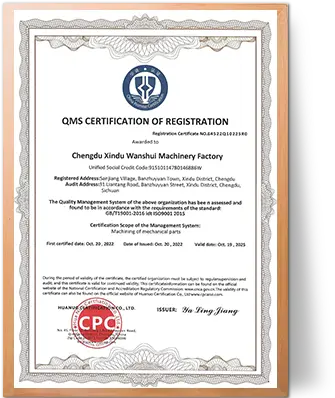
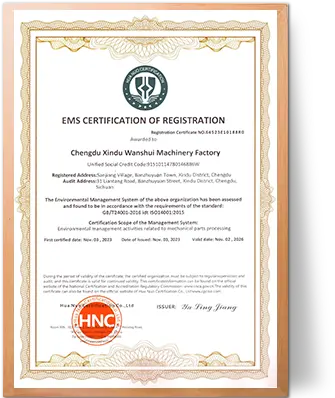
Certifications & Quality Standards

Our company holds CE certification and operates under an ISO 9001 quality management system. Every valve component we manufacture undergoes rigorous inspection before shipment — because in sour service, quality documentation is as important as the part itself.
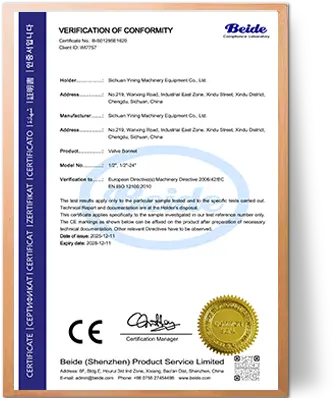
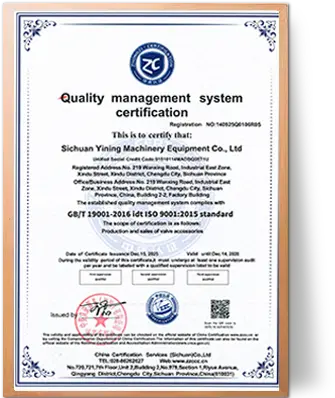
CE Certificate
ISO 9001 Certificate
Quality Certificate 1
Quality Certificate 2
Quality Certificate 3
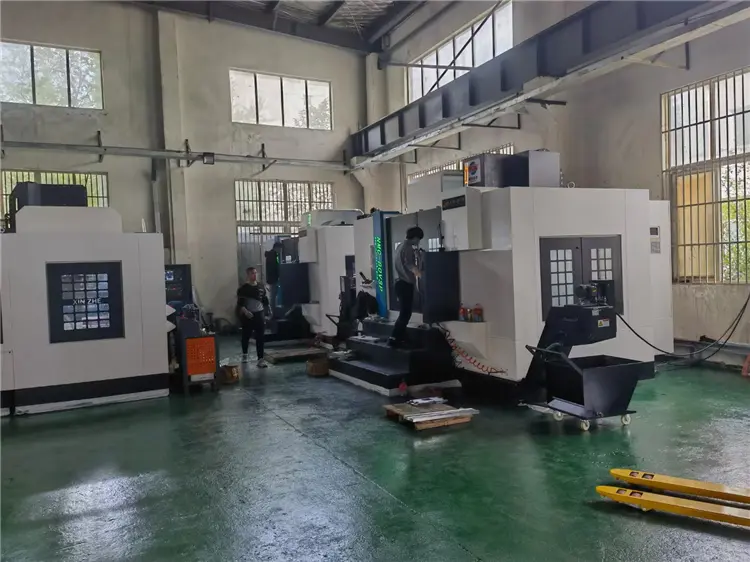
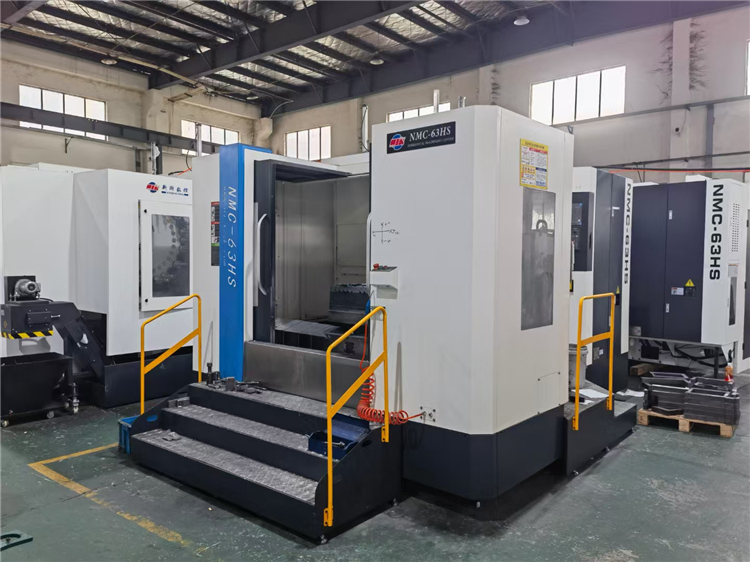
🏗️ Manufacturing Facility

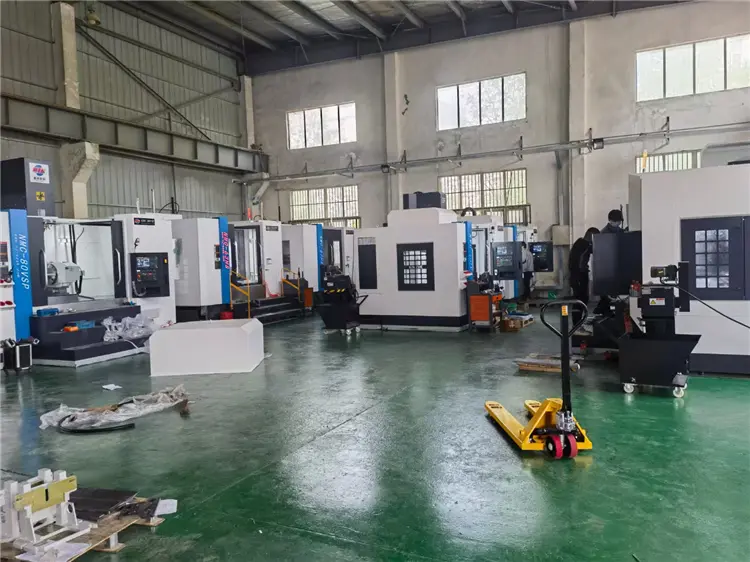
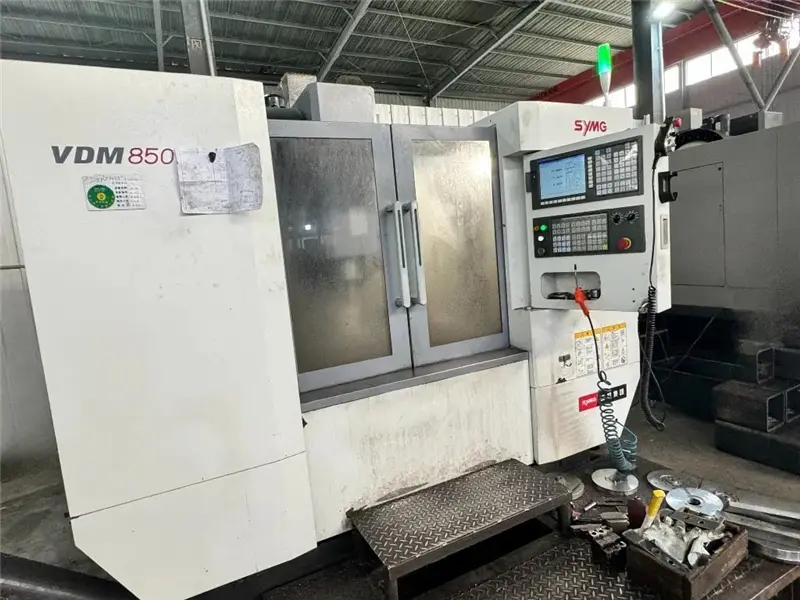
Our Production Environment

State-of-the-art CNC machining centers, forging equipment, and in-house testing labs — built to handle the most demanding sour service valve component requirements.
🤝 Our Services

End-to-End Support for Sour Service Valve Sourcing

From initial drawing review to final delivery documentation, we handle every step of the NACE-compliant valve component supply chain.

🔧

What We Can Offer You

Yining Machinery specializes in precision processing of industrial valve parts with extensive experience in non-standard and sour service components. Our services include:
• Sample processing & prototyping
• Valve & valve parts OEM/ODM service
• Mass production with NACE documentation
• Custom valve body, stem, seat, seal ring, bracket
• Surface treatment (sandblasting, zinc plating, Dacromet, passivation, polishing)
📊

Co-Operation Process

Our process is clear and efficient for sour service orders:
1️⃣ Confirm drawings or samples
2️⃣ Evaluate material & NACE compliance requirements
3️⃣ Quote with documentation package included
4️⃣ Sample or batch production with in-process inspection
5️⃣ Final hardness & material verification before shipment
6️⃣ Full documentation package + after-sales support
✅

Quality & Delivery Guarantee

Each batch undergoes dimensional, material, surface, and hardness inspection before leaving our facility. For sour service orders, we provide: MTR with heat traceability, hardness test reports per finished part, heat treatment records, PMI results (on request), and third-party inspection coordination. Standard delivery: 15–25 days. Priority production available for urgent sour service projects.
💼

Flexible Order Modes

We support all order sizes for sour service components:
• Sampling: 3–7 days for qualification samples
• Small Qty: Low MOQ supported (negotiable)
• Batch Orders: Long-term supply capacity
• Payment: T/T, phased settlement
• Trade Terms: CIF / FOB available
🛡️

After-Sales & Service Commitment

All products are inspected and qualified before shipment. If any quality issue arises during installation or operation, contact us immediately — we respond within 48 hours. We support return & exchange, technical root cause analysis, and long-term parts maintenance. For sour service failures, we provide full material traceability review to support your investigation.
📐

Materials We Machine

NACE-compliant material grades we regularly process:
• Stainless: F304, F316, 316L, XM-19
• Carbon Steel: A105, LF2
• Special Alloys: Monel 400, 17-4PH (H1150)
• Duplex: 2205, 2507 on request
• Others: 410, 420 (with hardness control)

Ready to Source NACE MR0175 Compliant Valve Components?

Whether you're specifying valve stems, bodies, seats, or trim for an H₂S-containing system, Yining Machinery can supply the right material with the right documentation — every time. Tell us your service conditions (H₂S partial pressure, temperature, pressure rating) and we'll recommend the optimal NACE-compliant material and provide a complete documentation package with your order.

✓ ISO 9001 Certified  |  ✓ CE Certified  |  ✓ Full MTR & Hardness Documentation  |  ✓ 20+ Years Experience  |  ✓ OEM / Custom Parts Welcome