




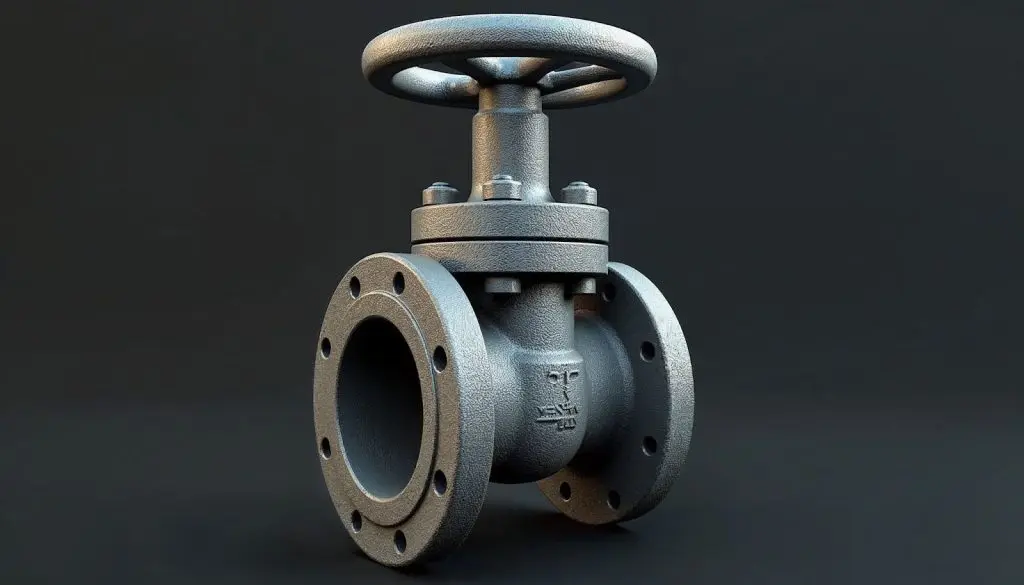
Weekly Industrial Valve Brief (2025): Gate Valve Body
Why this matters: Turnarounds and new builds are overlapping, tightening capacity at foundries/forges, large-bore machining, and third-party labs. A clean technical freeze before PO remains the fastest lever for on-time delivery.
Market snapshot
-
Capacity tight for casting/forging slots, precision machining, and EN 10204 3.2 witnessing.
-
Lock scope early to avoid rework; a single freeze often saves 1–3 weeks.
Material picks (fit for service)
-
A105/low-alloy: reliable for general service, good machinability.
-
304/316L: water/mild chlorides; 316L offers better corrosion margin.
-
CF8/CF8M cast bodies: enable complex valve geometry; raise NDE coverage.
-
Duplex 2205: chlorides + strength; verify heat treatment/phase balance.
-
Low-temp/sour: specify impact values and ISO 15156 / NACE MR0175; cap hardness.
Standards (cite clauses, not slogans)
List editions and clauses for ASME B16.34, API 600/602/6D, ISO 15156, ISO 15848, and EN 10204 (3.1/3.2). Attach a one-page table of waivers, witness points, and deliverables (MTC, HT, NDE, hydro/air, PMI, dimensions).
Manufacturing & NDE
-
Flow: preform → datums → critical features → finish → test.
-
Control seat-bore location/coaxiality, gate channel perpendicularity, guide-face flatness.
-
NDE: UT/RT (volumetric), MT/PT (surface), PMI (mix-up control); book labs early.
-
Use FAI to freeze datums, tolerances, and measurement methods.
Pressure & leakage tests
Define test medium, temperature, and hold time for hydro. Verify bidirectional seat/leak tests. Keep full records (calibration IDs, conditions, observations), not just “PASS”.
PO attachment (10-point micro-checklist)
-
Face-to-face; flange; sealing face (RF/RTJ)
-
Material grade + heat-treatment state
-
NDE scope; witness plan; EN 10204 level
-
Tolerances (coaxiality/perpendicularity/roughness)
-
Test medium/temperature/hold time; leakage class
-
Marking/traceability details
-
Surface protection plan
-
Document pack (MTC, HT, NDE, hydro/air, dimensions, CoC)
-
Packaging/Incoterms
-
Milestones (preform, FAI, witness, hydro, ship window)
Bottom line: Clear valve specifications, focused witnessing on non-substitutable steps, and a transparent critical path keep the valve body program predictable—on quality, on compliance, on time.