



Record LNG Additions + New API 6D Updates: How 2025 Projects Reframe Valve Specs
Global LNG is entering a record build-out. IEA's tracker shows roughly 290–295 bcm/yr of new liquefaction capacity scheduled to come online between 2025 and 2030—meaning more cryogenic service, more isolation duties, and tighter leakage targets across every critical valve in the chain. For EPCs and plant owners, that wave reshapes the valve spec: low-temperature toughness, stem-seal integrity under thermal cycling, and proven actuation at -196 °C become baseline checkpoints.
Standards are moving too. On July 1, 2025, U.S. PHMSA moved to incorporate an updated edition of API Spec 6D by reference—relevant for pipeline and piping valve conformity. And since late 2024, API 6D Addendum 2 has explicitly addressed hydrogen gas service, sharpening requirements that spill over into mixed-gas and future-ready valve designs. If your LNG site plans for H₂ blending or adjacent CCUS infrastructure, aligning pipeline valve purchases with the newest 6D guidance reduces retrofit exposure.
Policy pressure is another driver. EPA's methane rules and the MERP framework increase the cost of leaks; combined with extended compliance timelines now being finalized, operators still need verifiable low-emission valve packages and robust LDAR results to manage risk. That pushes more specs toward ISO 15848-1 type-tested packing performance and documented fugitive-emissions controls on every critical valve.
What to do on current projects?
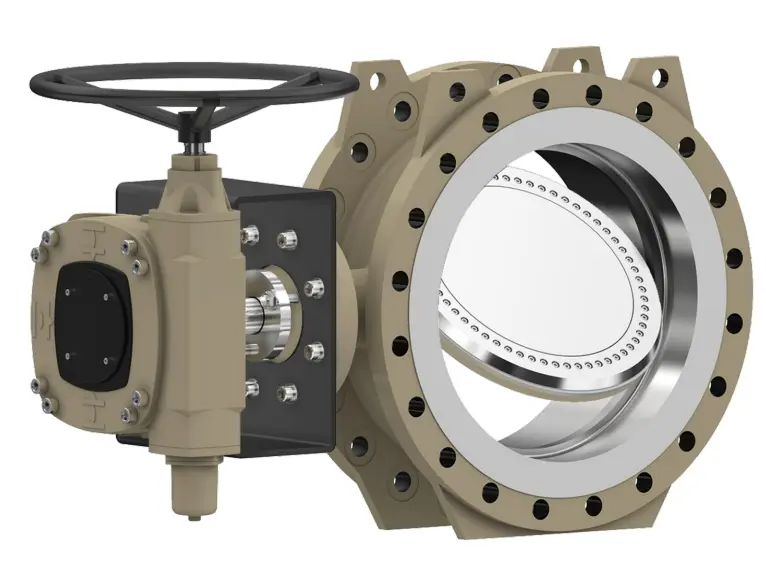
•Cryogenic validation. Demand helium seat-leak and stem-seal data at temperature for each valve size/class—especially large-bore ball valve and triple-offset butterfly valve.
•Emissions focus. Specify ISO 15848-1 test reports and endurance class targets for all control valve and isolation valve duties where vented gas is possible.
•Hydrogen-ready pipeline scope. Where feasible, select pipeline valve models qualified under the newest API 6D addenda to avoid later re-qualification.
•Actuation & torque. Confirm cryogenic torque margins and partial-stroke test capability for ESD valve sets.
•Cost watch. Nickel pricing is soft year-on-year, while molybdenum has shown firmness; stainless 316 valve BOMs may see mixed effects. Keep alternates (CF8M vs. duplex) pre-qualified to buffer swings.
Bottom line
The 2025–2030 project queue rewards suppliers that can prove leakage performance, cryogenic reliability, and hydrogen-readiness across their valve portfolio. Buyers that standardize on up-to-date API 6D language and emissions testing will cut rework and accelerate approvals as the LNG wave crests.