



Process Difficulties and Engineering Adaptation Challenges in Valve Body Manufacturing in 2025
In the current industrial system for safety and long-term operational stability requirements continue to improve the background, the valve body as the core pressure components, its design rationality and manufacturing process control directly affect the performance of the machine. 2025, we have summarized in a number of customized orders in several typical technical difficulties, worthy of attention in the industry.
The first is the internal stress control problem of thick-walled carbon steel valve body. In traditional thinking, rough machining and heat treatment are often arranged separately, but in high-pressure applications, such parts must be aged or partially annealed after rough machining to reduce the risk of deformation in the subsequent finishing stage. We have dealt with a batch of 16” WCB valve body, the customer did not require thermal aging, the result in the finished product inspection found that the channel coaxiality deviation of up to 0.4mm, the final reworking time-consuming up to 7 days.
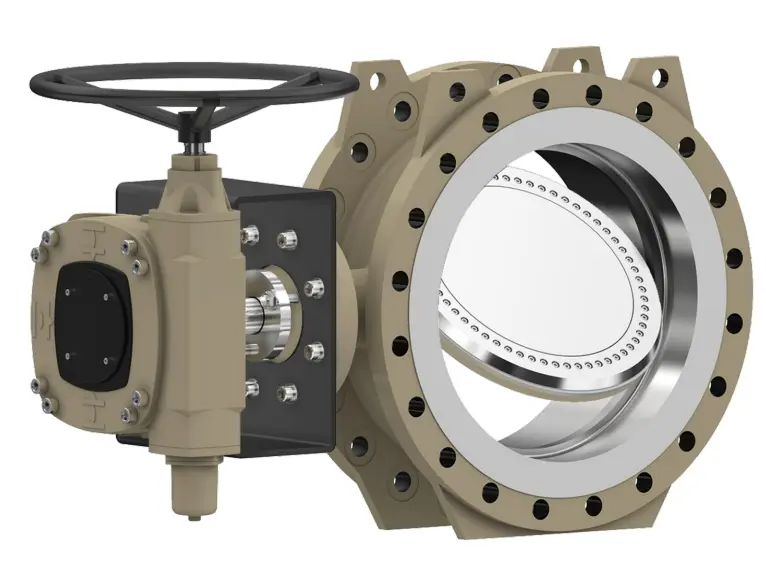
Secondly, more and more customers propose that the valve body needs to be reserved for automation interfaces, such as actuator mounting surface, sensor wire slots, etc. This requires early stage intervention in the entire valve body. This requires early intervention in the design of the entire machine, otherwise the later field drilling or welding not only increases the workload, but also may damage the coating or change the stress distribution, laying a hidden danger.
In terms of material selection, for sulfur-containing or chloride-containing media environment, traditional stainless steel such as CF8M can no longer meet the requirements of long-cycle operation. We have recently begun to try to use CD4MCu or 2507 duplex steel for some overseas projects, this kind of material has strong corrosion resistance, but the casting process and welding process puts forward a higher threshold, especially in the tendency to thermal cracking and the interlayer bonding strength needs extra attention.
Finally, in terms of testing and quality traceability, we have made three-coordinate dimensional inspection, magnetic particle flaw detection, pressure test and material traceability form as the standard delivery, which not only enhances customer trust, but also facilitates fault tracing in the later operation and maintenance stage.
Although the valve body is a basic component, it is gradually moving from “cast out” to “systematic engineering components” positioning. The depth of involvement of engineers in the design stage will determine whether the product is competitive and reliable.