



Common Causes and Treatment Suggestions for Bonnet Structural Assembly Deviations
The structure of the bonnet is not much of a problem in small valves, but once it is above DN400, the assembly error is easy to be exposed. Many ball valves or gate valves on the project site have abnormal opening and closing or packing failure, and they are all related to the mismatch or deviation of the valve cover.
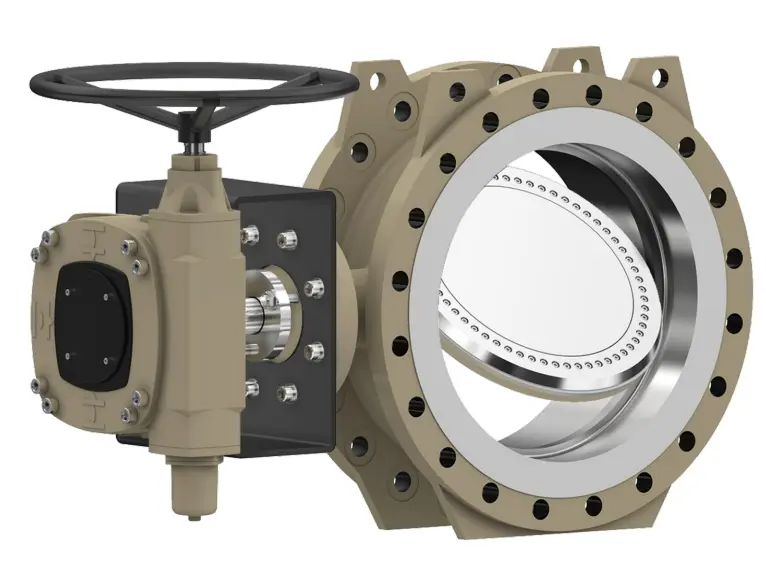
We have previously taken over a large-diameter ball valve project for mining areas, and the customer said that the opening and closing sound is wrong, and the manual ball valve is stuck halfway through. At first, they thought it was a problem with the valve stem or ball, but later we returned to the factory to check that it was a slight beating of the flange surface on the side of the valve cover, which caused the lower shaft seat hole to deviate from the center of the valve body by 0.3mm. It doesn't look big, but as soon as the ball core turns, the axis is inconsistent and the torque is unstable.
In response to this kind of problem, we now give customers a suggestion: the drawing must be clearly marked with the positioning surface, and it is generally recommended to use the upper flange surface or the center hole as a reference to do clamping. Especially for large diameters, we recommend integral vertical turning machining, which is not divided into two operations. If the customer's side cannot be clamped as a whole, we can assist in adding positioning grooves or guide columns according to the process drawing.
In addition, during the on-site assembly of some projects, the dislocation of the bolt hole of the valve cover leads to forced assembly, which seems to be no problem to install, but in fact, the preload stress has been uneven, and it is easy to loosen or leak after a period of operation. We usually do a mock assembly confirmation before shipment, and the key dimensions are all gauges to ensure that the runout of the flange ring is within 0.05, and the verticality of the bearing hole and axis is up to standard.
Although the bonnet is a fitting piece, it is the 'starting point' of the accuracy of the entire upper structure, and if it is wrong, the ball core, valve stem, and stuffing box will all be affected. It is recommended that the customer consider the fit relationship at the design stage, and if necessary, we can also provide assembly structure advice or assist in adjusting the benchmark logic to avoid rework.