


I. Core Principles of Valve Sourcing
Industrial valves and their accessories are mission-critical components in fluid control systems. The success of global procurement relies not on securing the lowest initial price, but on mastering four foundational pillars of engineering and compliance.
1. Standard Matching
Ensuring dimensional and design standards align perfectly. A mismatch in face-to-face dimensions (e.g., ASME B16.10 vs. EN 558) or flange drilling can lead to catastrophic installation failures and project delays. Every specification must be cross-verified.
2. Material & Condition Adaptability
Material selection must account for fluid corrosivity, pressure-temperature ratings, cavitation, and flashing. Utilizing duplex stainless steels or exotic alloys is mandatory for severe service conditions like high H2S concentrations.
3. Traceability & Quality Files
Complete documentation is non-negotiable. This includes EN 10204 3.1/3.2 Mill Test Reports (MTRs), Positive Material Identification (PMI), and heat numbers stamped on physical bodies to ensure 100% metallurgical traceability.
4. Target Market Regulations
Compliance with regional laws dictates market entry. Whether it's the CE/PED directive for the European Union, EPA fugitive emission consent decrees in the USA, or EAC certification for the Eurasian Customs Union.
II. Product Classifications & Technical Focus
A granular understanding of valve components is essential for effective global sourcing. We categorize products into three distinct technical tiers, each requiring specific manufacturing and inspection protocols.
1) Complete Valves
Ball, Gate, Butterfly, Globe, Check, and Control Valves.
- Design Standards: Strict adherence to API, ASME, and ISO geometric and functional design parameters.
- Pressure Ratings: Accurate wall thickness calculations per ASME B16.34 (Class 150 to 2500+).
- Testing Protocols: Hydrostatic shell and seat leakage testing (API 598 or API 6D).
- Certification: Fire-safe (API 607/6FA), SIL ratings, and regional approvals.
- Identification: Clear MSS SP-25 standard nameplates and body casting marks.
2) Pressure-Bearing Parts
Valve Bodies, Bonnets, and End Caps.
- Material Integrity: Selection of high-grade carbon steel (WCB, LCC), stainless steel (CF8M), or exotic forged materials (A105, F51).
- Casting/Forging Tech: Investment casting for precision; heavy forging for high-pressure durability.
- Non-Destructive Testing (NDT): Radiographic (RT), Ultrasonic (UT), Magnetic Particle (MT), and Penetrant (PT) testing to detect subsurface flaws.
- Heat Treatment: Normalizing, tempering, or solution annealing to optimize mechanical properties.
- MTRs: Certified chemical and mechanical property reports.
3) Non-Pressure Parts
Stems, Balls, Seats, Brackets, and Couplings.
- Dimensional Accuracy: CNC machining tolerances critical for dynamic sealing and torque reduction.
- Surface Treatment: ENP (Electroless Nickel Plating), Tungsten Carbide, or Stellite hard-facing for wear and corrosion resistance.
- Mechanical Properties: Anti-blowout stem designs and high-tensile strength requirements.
- Fit Precision: Micro-level finishing for metal-to-metal seated ball valves to achieve zero leakage.
- Polymer Quality: Virgin PTFE, PEEK, or Devlon for soft seats in varying temperature ranges.
III. International Standard Systems Matrix
Navigating the complex web of international standards is the most critical task for an industrial buyer. Below is the practical breakdown of the most vital compliance frameworks.
1. Design & Product Standards
These standards dictate the physical dimensions, wall thicknesses, and operational mechanics of the valves:
- API 6D: Specification for Pipeline and Piping Valves. Crucial for oil & gas midstream sectors.
- API 600: Steel Gate Valves - Flanged and Butt-welding Ends, Bolted Bonnets.
- API 608: Metal Ball Valves - Flanged, Threaded, and Welding Ends.
- API 609: Butterfly Valves: Double Flanged, Lug- and Wafer-Type.
- ASME B16.34: Valves - Flanged, Threaded, and Welding End (Pressure-Temperature Ratings).
- DIN / EN / ISO: European unified standards ensuring cross-border compatibility within the EU.
2. Testing & Inspection Standards
Validation of the manufacturing process through rigorous testing:
- API 598: Valve Inspection and Testing. Covers acceptable leakage rates for both liquid and gas testing.
- ISO 5208: Industrial valves - Pressure testing of metallic valves.
3. Material & Anti-Corrosion
Vital for upstream oil & gas and chemical processing:
- NACE MR0175 / ISO 15156: Materials for use in H2S-containing environments in oil and gas production. Dictates strict hardness limits (e.g., HRC 22 max) to prevent Sulfide Stress Cracking (SSC).
4. Low Fugitive Emission Standards
With increasing environmental regulations globally (like the US EPA's Clean Air Act), controlling Volatile Organic Compounds (VOCs) escaping from valve stems is paramount.
- ISO 15848-1 & -2: Industrial valves - Measurement, test and qualification procedures for fugitive emissions.
- API 622: Type Testing of Process Valve Packing for Fugitive Emissions.
- API 624: Type Testing of Rising Stem Valves Equipped with Graphite Packing for Fugitive Emissions.
5. Drinking Water & Sanitary Standards
Valves utilized in municipal water treatment or the food & beverage industry require non-toxic, lead-free certifications to ensure public health and safety.
- NSF/ANSI 61: Drinking Water System Components - Health Effects. Certifies that materials do not leach harmful contaminants into water.
- NSF/ANSI 372: Drinking Water System Components - Lead Content. Ensures compliance with lead-free mandates.
- WRAS / ACS: UK and French equivalents for water regulation advisory.
IV. Advanced Quality Control & Factory Auditing
A practical sourcing guide must address how to evaluate a manufacturer's true capability. Paper certifications are not enough; physical quality control infrastructure is required.
In-House Machining Capabilities
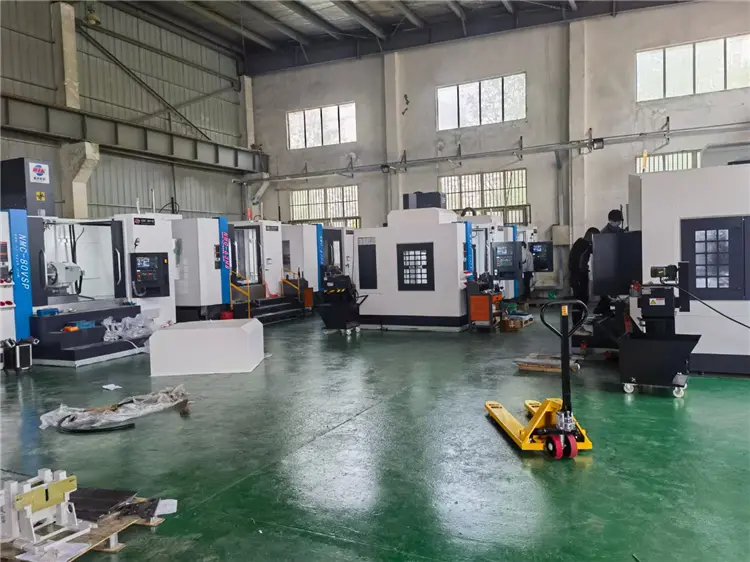
A premier valve manufacturer must possess advanced CNC machining centers. The precision of the valve seat pocket and stem bore directly impacts the valve's ability to pass API 598 seat tests and API 624 fugitive emission tests. Look for 5-axis machining capabilities and automated CMM (Coordinate Measuring Machine) inspections.
Metallurgical Laboratory
Relying solely on external foundries is a risk. Top-tier suppliers maintain in-house spectrometers for chemical analysis, tensile testing machines for mechanical yield/tensile strength verification, and Charpy V-notch impact testers to ensure materials perform safely in cryogenic or high-stress environments.
Factory Acceptance Test (FAT)
The FAT is the final barrier before shipment. It involves witnessing (often via third-party inspectors like SGS, TUV, or DNV) the hydrostatic and pneumatic testing of the valves. Digital pressure recording charts should be provided to prove the pressure was held for the standard-specified duration without pressure drop.
Material Traceability
Leakage Tolerance
Quality Inspection
V. About Our Manufacturing Excellence
Sichuan Yining Machinery Equipment Co., Ltd. was established in 2005 and is a company specializing in the production and manufacturing of various types of valves and finished valve accessories. Over the years, we have been dedicated to the field of valves and are committed to providing high-quality and high-performance products and solutions to customers worldwide.
The company has always adhered to the business philosophy that "Quality is the boss, quality is our salary", insisting on taking quality as the core and regarding stable and reliable product quality as the solid foundation for long-term cooperation with customers. We are well aware that high-quality products and stable delivery capabilities are the keys to the continuous development of an enterprise.
The company has passed the ISO9001 quality management system certification and CE certification, and strictly follows international standards for production and quality control to ensure that every product meets industry and customer requirements.
With years of manufacturing experience and mature production techniques, we have a professional technical and management team with rich theoretical knowledge and practical experience. We adhere to the development direction of "conceptual innovation, technological innovation, and management innovation", constantly improving product quality and enterprise competitiveness.
In the future, Sichuan Yining Machinery Equipment Co., Ltd. will continue to take outstanding quality as the core, customer demands as the orientation, and join hands with partners to create a long-term, stable and mutually beneficial win-win cooperative relationship.
VI. Practical Buyer's Checklist for Valve Procurement
Use this actionable checklist to mitigate risk, ensure compliance, and streamline your global sourcing operations for valves and accessories.
Technical Specification Review
- Verify the exact fluid medium, operating pressure, and temperature range.
- Confirm the required end connections (Flanged RF/RTJ, Butt-Weld, NPT).
- Check if the application requires special trims (e.g., Stellite for abrasive media, Monel for seawater).
- Ensure actuator requirements (Pneumatic, Electric, Hydraulic) match the plant's available power supply and fail-safe requirements.
Vendor Qualification & Audit
- Request and verify current, unexpired ISO 9001, API, and CE certificates directly from the issuing bodies.
- Ask for a detailed Quality Assurance Manual (QAM) and Inspection and Test Plan (ITP) before placing an order.
- Confirm the vendor’s capability to provide EN 10204 3.1 material certificates for all pressure-retaining parts.
- Evaluate their packaging and logistics capabilities to prevent flange damage or internal contamination during ocean freight.